Blogs
Cosmetics Manufacturing
Compounding
R & D
Trends and Innovation
Production
Formulating
Regulatory Compliance
Skincare
SPF
Haircare
Bodycare
From Brief to Batch: What a Realistic Beauty Product Development Timeline Looks Like
An honest look at what beauty product development timelines really involve, from initial brief and formulation through to testing, regulatory approval, packaging and commercial scale-up. This article explores why speed-to-market is often misunderstood, where timelines can realistically be compressed, and how a full-service manufacturing partner helps brands maintain momentum from concept to commercial launch.
May 19, 2026
Emma Payne, Sales Director, THG LABS
Blogs
From Brief to Batch: What a Realistic Beauty Product Development Timeline Looks Like
An honest look at what beauty product development timelines really involve, from initial brief and formulation through to testing, regulatory approval, packaging and commercial scale-up. This article explores why speed-to-market is often misunderstood, where timelines can realistically be compressed, and how a full-service manufacturing partner helps brands maintain momentum from concept to commercial launch.
May 19, 2026
5 mins read
Emma Payne, Sales Director, THG LABS
- From Brief to Batch
- Stage 1: Brief and Feasibility (Weeks 1–3)
- Stage 2: Concept Formulation and Initial Prototyping (Weeks 3–10)
- Stage 3: Review, Iteration, and Optimisation (Weeks 10–20)
- Stage 5: Regulatory Documentation and Notification (Weeks 28–40)
- Stage 6: Packaging Finalisation and Artwork (Weeks 20–36)
- Stage 7: Scale-Up and Trial Production (Weeks 36–44)
- So, How Long Does It Actually Take?
Speed to market is one of the most frequently cited priorities in beauty product development. It’s also one of the most frequently misunderstood. Every brand wants their product on shelf as quickly as possible however it’s commonly underestimated how long the journey from brief to batch actually takes, and why.
A well-structured development process, with the right manufacturing partner and genuine full-service capability, can be significantly faster than a fragmented one. But setting realistic expectations from the outset, understanding where time is well spent and where it can genuinely be compressed, is essential for brands who want to launch successfully, not just quickly.
Our Sales Director, Emma Payne, shares an honest, stage-by-stage account of what a beauty product development timeline looks like, and what drives it.
Stage 1: Brief and Feasibility (Weeks 1–3)
Every successful product development starts with a clear brief. In practice, briefs range from extremely detailed technical specifications to a mood board and a market positioning statement. Both can work but they lead to very different early-stage processes.
The brief stage should capture: the target consumer and their unmet need; the intended claims and the evidence standard those claims will require; any certification requirements (Halal, vegan, organic); packaging preferences and constraints; target retail channels; intended markets and regulatory jurisdictions; and commercial parameters including target cost of goods and launch volume.
A good manufacturing partner will use this brief to conduct a rapid feasibility assessment: is the concept achievable within the stated parameters? Are there formulation constraints, regulatory limitations, or supply chain considerations that need to be addressed before development begins? This stage is also where a realistic timeline can first be estimated which will be based on the specific complexity of what is being developed.
Brands that invest in developing a detailed, well-considered brief consistently save time downstream. Ambiguity in the brief is the single most reliable predictor of iteration cycles and delays.
Stage 2: Concept Formulation and Initial Prototyping (Weeks 3–10)
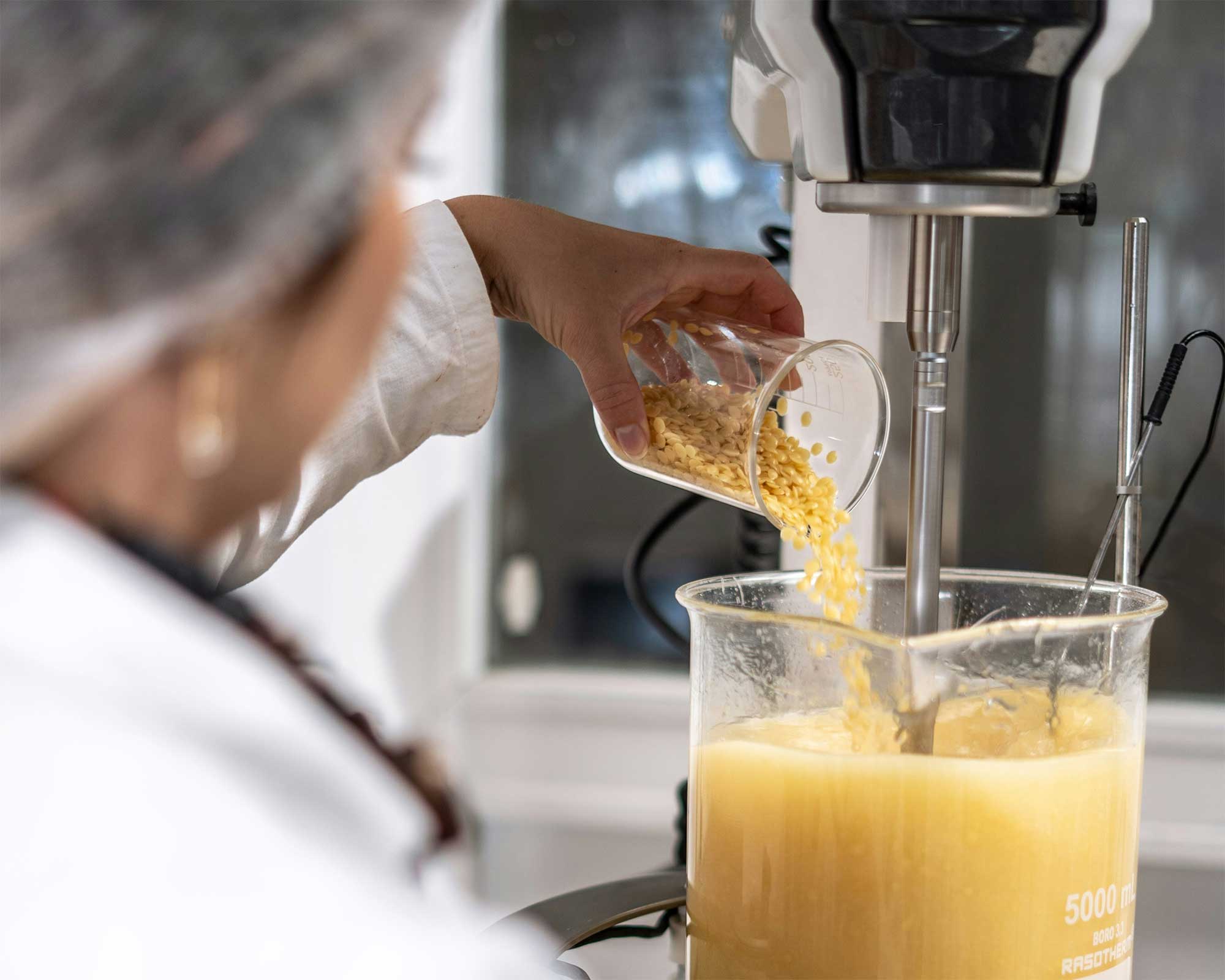
With a clear brief, the R&D team can begin formulation work. This typically involves two parallel workstreams: ingredient selection and initial formulation development, and supply chain qualification for key raw materials.
Initial prototypes – typically three concepts – are developed to explore different approaches to the brief. At this stage, the focus is on demonstrating that a formulation concept is directionally correct: the right texture, the right sensory profile, the right active ingredient rationale. Detailed optimisation comes later.
The timeframe for this stage varies significantly with formulation complexity. A bodycare lotion in a well-established format may reach first prototype in two to three weeks. A novel SPF formulation with a specific cosmetic aesthetics requirement, or a complex active delivery system, may take longer. Brands with established relationships and approved ingredient lists with their manufacturer can compress this stage meaningfully.
We would also include packaging scoping in this initial phase, too.
Stage 3: Review, Iteration, and Optimisation (Weeks 10–20)
Initial prototypes are rarely final. The review and iteration stage is where formulations are refined against the full set of brief requirements: sensory profile, stability performance, claims substantiation data, and regulatory compliance. It is also where packaging compatibility is assessed.
The number of iteration cycles depends on how complex the brief is and how clearly it was specified. Simple briefs with clear parameters may achieve a preferred formulation in one or two iterations. Complex formulations with demanding claims requirements may require more. This stage is the most commonly underestimated in development schedules.
Regulatory review should run concurrently with formulation development, not sequentially. A regulatory team that is reviewing formulations in real time, flagging potential issues with specific ingredients or concentrations before they are finalised. This prevents the scenario where a preferred formula fails regulatory assessment and must be reformulated from scratch.
Stage 4: Stability and Safety Testing (Weeks 16–36)
This is the stage that most consistently surprises brands unfamiliar with the development process, both in its importance and in its duration. Stability testing is the scientific basis for a product's claimed shelf life and a core component of the Cosmetic Product Safety Report (CPSR) required under both UK and EU regulations.
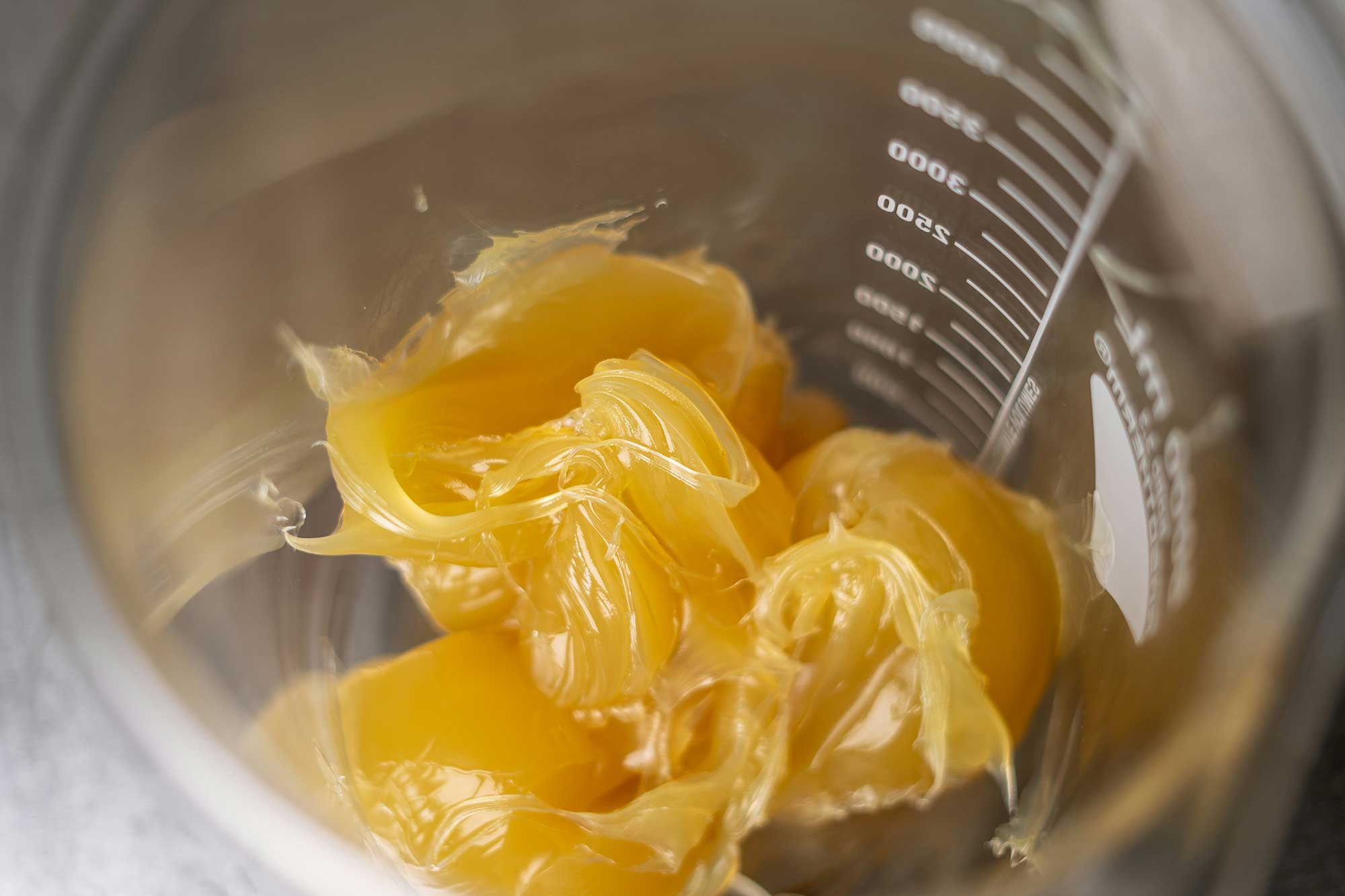
A rigorous stability programme includes accelerated stability testing (typically 12 weeks at elevated temperature and humidity), long-term real-time stability (running throughout the product's intended shelf life), photostability assessment for products that will be exposed to light, and compatibility testing with all primary packaging components.
The 12-week accelerated programme is the minimum typically required to provide sufficient confidence in a 36-month claimed shelf life. This cannot be compressed. What can be optimised is how stability testing is structured relative to the rest of the development process for example, starting stability on promising formulations early, before final optimisation is complete, provides data sooner and reduces the risk of late-stage surprises.
Microbiological testing which is challenge testing to validate preservation efficacy, runs in parallel and typically takes four to six weeks. Safety assessment, conducted by a qualified cosmetic safety assessor, requires all stability and toxicological data to be complete before it can be finalised.
Stage 5: Regulatory Documentation and Notification (Weeks 28–40)
Before a cosmetic product can be placed on the UK or EU market, a Product Information File (PIF) must be compiled and a CPSR completed by a qualified assessor. For EU market access, the product must also be notified through the Cosmetic Products Notification Portal (CPNP). The UK has an equivalent notification requirement through the Office for Product Safety and Standards.
The timeline for this stage depends on the completeness of the documentation generated during development and the workload of the qualified safety assessor. A well-organised development process, where regulatory documentation is built incrementally throughout development rather than compiled at the end, can significantly compress this stage.
For markets outside the UK and EU, regulatory requirements vary significantly. GCC countries each have their own notification systems. Some APAC markets require local registration that can take six to twelve months. Brands with international launch plans need to build these timelines into their overall project plan from the outset.
Stage 6: Packaging Finalisation and Artwork (Weeks 20–36)
Packaging development runs in parallel with formulation and stability testing but it has its own critical path. Packaging decisions must be made early enough to allow tooling (if bespoke components are involved), compatibility testing, and artwork development. Artwork, particularly for products destined for multiple markets with different labelling requirements, is consistently a source of timeline slippage when it is not given sufficient resource and lead time.
A full-service manufacturer with in-house packaging, design, and artwork capability can manage these workstreams in genuine integration with formulation and regulatory development. The efficiency gains compared to managing multiple external suppliers are substantial particularly for brands with complex multilingual artwork requirements.
Stage 7: Scale-Up and Trial Production (Weeks 36–44)
Before full commercial production, a manufacturing scale-up trial is essential. This involves producing the formulation at commercial batch scale for the first time, verifying that the process parameters developed at lab scale translate correctly to production equipment, and generating the first commercial-scale batch records.
Scale-up can reveal formulation or process issues that are not apparent at lab scale for example, mixing time requirements, heat sensitivity during compounding, filling characteristics in commercial equipment. A manufacturer with deep scale-up experience will anticipate these issues and manage them efficiently.
So, How Long Does It Actually Take?
For a straightforward beauty product with a well-defined format, an established regulatory market, no novel ingredients, no certification requirements would have a realistic brief to first commercial batch timeline of between 12 to 18 months. For a complex product - with novel actives, demanding claims, multiple market registrations, bespoke packaging, organic or Halal certification - to 24 months is more realistic.
These timelines can be compressed with the right infrastructure: a full-service beauty manufacturer with all functions under one roof, strong regulatory capability, and established supply chain relationships. They can also be extended significantly by fragmented supplier relationships, late-stage regulatory issues, or incomplete briefs.
The most important investment a brand can make in development speed is choosing a manufacturing partner with the infrastructure to maintain momentum across every workstream simultaneously.

ABOUT THE AUTHOR
Emma Payne
Sales Director, THG LABS (Acheson)
Emma Payne, with over 25 years of expertise in the beauty industry, has a distinguished track record. As Sales Director at THG LABS, she propels sales and advances brand development for the global beauty brands we serve through strategic product development and our culture of collaboration, quality and innovation.
Starting her career at Boots as a Product Manager, Emma joined THG LABS (Acheson) in 1998. Since then, she has skilfully overseen cross-functional teams in both product and sales, nurturing partnerships with brands, retailers and suppliers across diverse personal care categories.
With her incredible knowledge of the industry and the intricacies of beauty manufacturing, Emma’s leadership is defined by a commitment to teamwork and the execution of impactful strategies that consistently yield results. Her warm, professional approach ensures our client relationships flourish with sustained success and growth for the world-leading beauty brands we partner.